
Budget 2014-15 Highlights
The much-awaited budget for 2014-15 has finally been announced by Finance Minister Arun Jaitley yesterday. While some industry-people welcomed the budget with open heart, many criticised it to be a ‘budget for the rich’. While there were several highs in this year’s budget, there were a few lows as well. We present you few of the pointers catering to various industry segments from the budget 2014-15. Information Technology: • Pan India programme “Digital India” to with an outlay of Rs 500 crore to be launched. • Programme for promoting “Good Governance” to be launched. A sum of Rs 100 crore provided. • 5 IITs, 5 IIMs, 4 AIIMS, 12 medical colleges, 2 agriculture universities to be set up. • Government allocates Rs 500 crore for internet connectivity in villages • Government imposes tax on import of telecom, IT products Aviation: • Scheme for development of new airports in Tier I and Tier II Cities to be launched. • Free baggage allowance increased from Rs 35,000 to Rs 45,000 • e-Visas to be introduced in phased manner to encourage tourism in 9 airports • Air India to get Rs 6500 crore allocation • 11.4 per cent hike for Civil Aviation Ministry in budget Oil & Natural Gas: • Production and exploitation of Coal Bed Methane reserves will be accelerated. • Possibility of using modern technology to revive old or closed wells to be explored. • Usage of PNG to be rapidly scaled up in a Mission mode. • Proposal to develop pipelines using appropriate PPP models. • Govt to cut duty on premium petrol • LNG exports to Pakistan to be exempt from import duty • Branded petrol price cut by over Rs 5 per litre • Government to de-regulate diesel prices, reduce subsidised LPG cylinders this fiscal. Retail: • Processed food may bite a bit less • Startups & entrepreneurs get Rs 10,000 crore backup • Government allows manufacturers to retail on e-commerce platforms • -19 inch LED TVs to cost less up to 5% while 3D TVs and imported durables to go up by 3% • Excise duty on footwear slashed • Govt surprises by keeping gold import duty at 10% • Prices of fizzy drinks, flavoured water, juices & energy drinks to increase by 5% • Excise duty on cigarettes, cigars, cheroots and cigarillos increased by 11%-72% Health and Pharma: • Free Drug Service and Free Diagnosis Service to achieve “Health For All”. • Two National Institutes of Ageing to be set up at AIIMS, New Delhi and Madras Medical College, Chennai. • A national level research and referral Institute for higher dental studies to be set up. • AIIMS like institutions in Andhra Pradesh, West Bengal, Vidarbha in Maharashtra and Poorvanchal in UP. A provision of Rs 500 crores made. • 12 new government medical colleges to be set up. • States’ Drug Regulatory and Food Regulatory Systems to be strengthened by creating new drug testing laboratories and strengthening the 31 existing State laboratories. • 15 Model Rural Health Research Centres to be set up for research on local health issues concerning rural population. • A national programme in Mission Mode to halt the deteriorating malnutrition situation in India to be put in place within six months. Well presenting the budget is like laying the foundation, implementation is the tough part, which will eventually ensure if the budget stuck true to its spirit of ‘Sab ka Saath, Sab ka Vikas’ or not. We keep our hopes high till then.
High and Fly: A threat to the travellers

When it comes to travel, people these days have shifted their preference to airplanes rather than going for the traditional carriage—railways. While there are a number of reasons for this shift of option, the primary one is the time saving nature of the airways. These days there are a number of flight options to choose from and the choice depends mainly upon the flight rates and flight safety. While every airline ensures safety and security to all its passengers, it seems that offlate the safety of the air passengers have gone for a toss. According to latest Lok Sabha reports, ten pilots were found tipsy in pre-flight checks and have been grounded in the first six months of this year. According to reports, since 2011, a total of 99 pilots, including the 10, have been grounded for testing positive in the pre-flight medical examination for alcohol consumption. While 17 of them tested positive in 2011, the number shot up to 41 in 2012, 31 in 2013 and 10 till July 14 this year. India’s aviation safety ranking has been recently downgraded, but what comes as a shocker to the commoners is the fact that the authorities are not shying away from relaxing the norms for drunk flying. According to a TOI report, a pilot will now lose his or her flying licence only when caught flying in an inebriated state for the third time. Earlier, this fate would befall them on the second instance itself. The directorate general of civil aviation (DGCA) diluted the punishment for flight crew reporting to work high in the recent past when it issued a new civil aviation requirement (CAR) on alcohol consumption. Well it seems the safety of the passengers have now taken a backseat, while our very own ‘HIGH’-flyers can continue raising a toast to the skies.
Are low-cost airfares really low-cost? A reality check

In this era of low-cost flying, when a majority of airlines are vying against each other to slash prices and lure customers on board, passengers really find it hard to resist the temptation to fly cheap and fall prey to the marketing gimmick played by the carriers. Blame it on the cut-throat competition prevailing among various airlines, such as SpiceJet, IndiGo and Jet Airlines, the news of frequent fare-cut and discount flying keeps pouring in at regular intervals. The spur in this competition can be attributed to the recent entrant in the aviation industry, the low cost flying sensation—Air Asia. But in this rat race to slash price and attract customers, one wonders if the customers are really benefited from such schemes? Well, analysing the actual fare structure, gives a different insight. For instance, airlines floating such schemes always keep their window for booking as narrow as possible, say between 2-3 days. However, a close look at the fare structure clearly shows that 30-50% of the total fare happens to be charges and taxes of airport, government and others, which do not belong to them, but are collected much in advance along with the base fare. This 30-50% comes totally interest-free for their financing of operations and debt. And to make things worse, even in cases such as cancellation of booking, the airlines charge a hefty fee which pricks a hole in the pockets of the customers and comes free to the airlines. Hence, going by the analysis one is forced to think, that whether the low-cost airfare is really a low-cost or is it a blessing in disguise for the carriers floating the scheme. It is for the regulators to answer whether such mobilisation of other’s charges, free of interest is in public interest or not.
Fuel Prices Unaffected By Recent Excise Hike
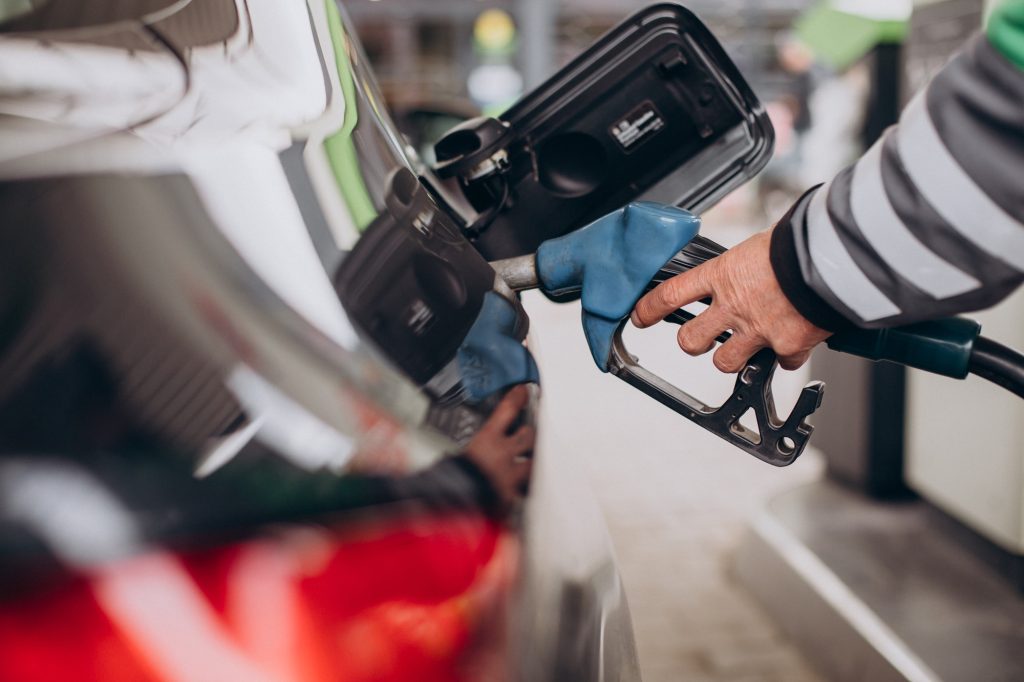
The oil & gas industry is probably the most volatile industry among others in the nation. Thus, frequent change in price is not an uncommon scenario for the industry and people. While people are used to sudden price hike or cut in petrol or diesel rates, a negative price change is always welcomed. Recently, government of India has hiked the excise duty on petrol and diesel by Rs 1.5. As speculated by the people, the move comes in order to boost government revenues and contain budget borrowing that could put off a likely cut in the retail prices of the two fuels. According to ET report, while the duty on branded petrol excise was hiked to Rs 3.85/litre from Rs 2.35/litre, that on unbranded petrol was hiked to Rs 2.70/litre from Rs 1.20/litre. Excise duty for branded diesel was raised to Rs 5.25/litre from Rs 3.75/litre and that of unbranded diesel was hiked to Rs 2.96/litre from Rs 1.46/litre. However, the excise duty hike is unlikely to affect fuel prices for consumers. Oil companies are likely to cut petrol and diesel prices shortly, due to sliding global prices. NDTV reports that the quantum of the price cut may be lower due to the excise duty hike. Those expecting further relief in prices, may be in for disappointment, as the excise duty hike may offset the likely reduction in prices. There is a possibility that cut may be put off altogether, as well. The government’s move to hike excise duty is aimed at getting higher revenues in its coffers. If prices are cut again, it would be the seventh reduction in petrol prices since August and the third in rates of diesel since its decontrol last month. Well as long as the price fluctuations don’t affect the consumers’ pocket, we are not complaining about the volatile nature of this sector.
Hyderabad Airport To Get A New Identity
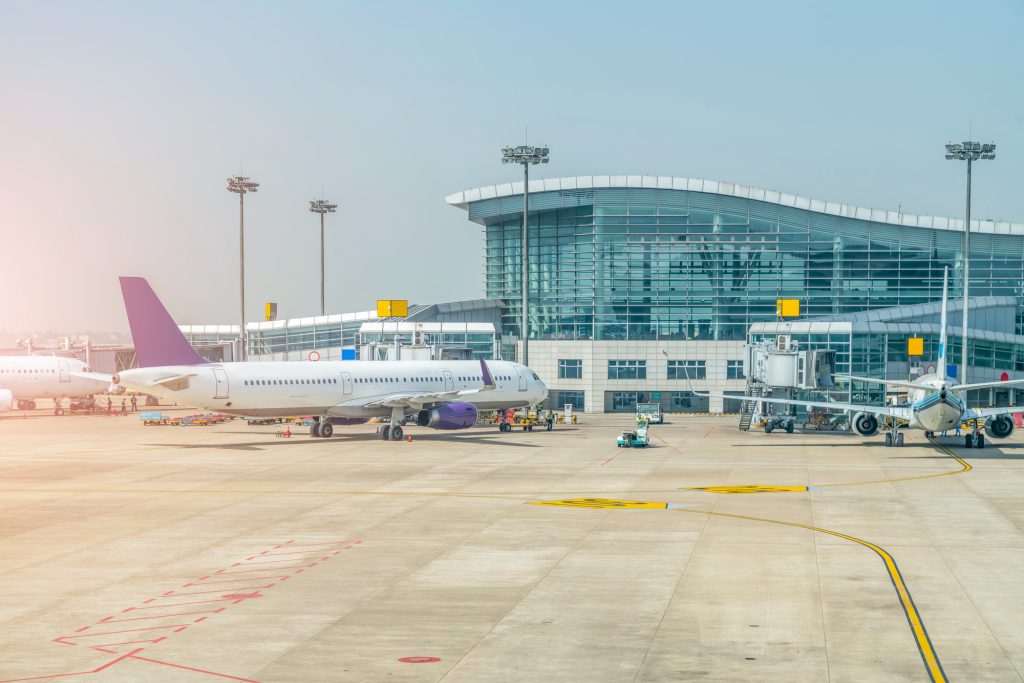
There is a famous quote by William Shakespeare which says, “What’s in a name?” Well if he only existed till date to justify his stance. As, the recent decision to rename the domestic terminal at the Rajiv Gandhi International Airport (RGIA), Hyderabad after N T Rama Rao, the founder of Telugu Desam Party, has created much of a furore among the masses . As soon as the news came to light that the Centre has decided to name the domestic terminal of Rajiv Gandhi International Airport (RJAI) after former Andhra Pradesh Chief Minister NT Rama Rao, there seems to be murmurs among the locals of the city. hub-hyderabad As per a report published in The Hindu Businessline, leaders of Telangana Rashtra Samithi and Congress strongly opposed the decision. Flaying the move, Chief Minister, K Chandrasekhara Rao, wondered why the Union Government chose to name it after an Andhra leader. “The Government can consider the names of Adivasi leader Komuram Bheem or Telangana Armed Struggle veteran Chakali Ilamma,” he said. The report further stated that the Centre had on Thursday decided to name the domestic terminal on late NTR. While shifting the international airport to Shamshabad, the then Congress Government named it after former Prime Minister Rajiv Gandhi (the international terminal was named after him at the Begumpet airport) but chose not to name the domestic terminal. This had attracted criticism from the Telugu Desam Party. Obviously what the locals want is a local Telangana leader’s name to be decided for naming the airport. However, latest reports indicate that Chief Minister N. Chandrababu Naidu has welcomed the Central government’s decision to rename the domestic terminal at Shamshabad airport as NT Rama Rao domestic terminal. Well whatever be the outcome of the prevailing discussions, it seems that change is inevitable now and is on the cards for sure.
Real Estate Companies Eye Online shopping Too !
Ranjeeta Bhattacharjee, ranjeeta@diligentia.net.in Online shopping festivals are gaining new highs on the popularity chart these days. Every now and then one or the other famous web portals organises such shopping festivals to attract buyers from different walks of life. The recent one creating a buzz is the Google’s Great Online Shopping Festival (GOSF) 2014. The company is all set to host its third edition of its “Great Online Shopping Festival” (GOSF) between Dec 10-12, a company statement said. While the news that the mega online shopping festival will feature over 450 partners offering their best deals for 72 hours this year is already creating a spur in the market; this year GOSF will also feature exclusive launches from brands like Motorola Nexus 6, HP, Lenovo, Tata Housing, Karbonn, Van Heusen, Asian Paints and great deals on exclusive designer collection from Pernia’s Pop Up Shops. And what is more amusing is the fact that India’s leading real estate developer Puravankara and Provident Housing are also participating in the festivals, wherein they will offer over a dozen of its ready to move-in homes or those that are just about going to be given possession. The properties expected to be offered under the special GOSF offer are: Puravankara Projects – Bangalore: Purva Atria Platina, PurvaVenezia, Purva Gold Crest, Purva Highland. In Chennai: PurvaSkycondos. In Kochi: PurvaGrandbay, Purva Oceana, Purva Eternity. The initiative was launched by Google in 2012, and has seen tremendous response with most players seeing over 350 percent growth in daily sales. Well going by the trend one can definitely say that the online fever is taking every leading sector in its cove and the day is not far off when we might see the purchase of properties done via online sale as well.
Fare Wars- Buyers Win, Companies Lose

The customarily incline season for air travel is continue with the commencement of January. With that, the landing of another contender, Vistara, has at the end of the day prompted a value war in the Indian skies with Jet Airways and Air India chooses to cut airfares. All the airlines organizations are currently advertising their offers that are similarly accessible at a less expensive rate than in the recent past. Doubtlessly diminished fares are fantastic news for buyers like us. At the same time, does it bode well? This may prompt an unfriendly effect on the effectively extended asset reports of some airlines organizations; however a precarious decrease in fuel costs in the course of the most recent three months will give some cushion. Indian carriers barely profit, and everybody know the destiny of Kingfisher Airlines and Spice Jet. High fuel costs and extravagant air terminals make India an extreme offer for aerial shuttles, with tickets typically valued below expense. In this “price deal”, airlines appear to wagering on volume. They contend that offering seats at less expensive costs helps them offer more tickets. The arrangement is to get more fliers, enough to counterbalance the lower tolls. Some airline officials have called such ideas dangerous and bizarre, while Indian airlines have a history of trying them. Though, prices are not directed in India and airlines don’t appear to pay any regard to the controller. Raising charges, and not cutting them, appears like one of the more objective approaches to save the airlines. However, there is a contrast between what is judicious and what is prominent. Such a move would prompt a disliked conclusion: in India, flying is still not for everybody, where the middle class person earns just to survive their family.
Chinese Oil Buyers Reduce Russian Purchases
Chinese refiners are canceling Russian oil cargos and adopting a wait-and-see attitude after the latest U.S. sanctions on Russia’s oil industry. Bloomberg reports, citing traders, that state-owned majors including Sinopec and PetroChina had canceled previously ordered Russian oil cargos, while the so-called teapots, or independent refiners, had stopped buying Russian crude to avoid getting penalized for violating the U.S. sanctions. The publication cited Rystad Energy as estimating that some 45% of Chinese imports of Russian crude have been affected by the sanctions. The figure represents some 400,000 barrels daily. As a result of the forced change in buying habits, Russian crude is trading at a deeper discount, with the flagship Urals at $57.99 per barrel at the end of last week. China mostly imports another blend, the Eastern Siberian-Pacific Ocean or ESPO, and the cargo cancellations have pushed its price lower, Bloomberg noted. Russia became the largest single oil supplier to both China and India over the past three years, thanks to the discounts its oil carries amid Western sanctions. Now, both China and India need to find alternatives to Russian crude, of which there are plenty, but at usually higher prices. China has made itself a supply cushion by importing more crude than it is using this year, and building more storage capacity. Plans are to have 11 new storage sites with a combined capacity of 169 million barrels by the end of 2026. India is having a more challenging time replacing Russian oil supply. Russia accounts for a third of its total oil imports, which in turn account for some 85% of consumption. Due to its overwhelming dependence on imported crude, India is especially vulnerable to price differences and is especially motivated by discounts when making buying decisions. Even Indian refiners are reportedly turning away from Russian crude as well, to avoid U.S. sanction penalties.
Indian Refining Giant Switches From Russian to Emirati Crude
Bharat Petroleum, one of the largest refiners in India, has bought a cargo of Emirati Upper Zakum crude, as it seeks alternatives to Russian oil, Reuters has reported, citing unnamed sources. The cargo is 2 million barrels, to be delivered next month. Bharat Petroleum bought it on the spot market, where it previously mostly bought Russian crude, at the same rate of around 2 million barrels monthly. Reports of Indian refiners buying non-Russian oil cargoes have become frequent in the past couple of weeks, following Washington’s decision to impose sanctions on two of Russia’s biggest oil exporters, Rosneft and Lukoil. The two together handle about half the country’s crude exports, a big portion of which goes to Indian refiners. While the news initially caused a small price shock, the effect quickly evaporated as it became clear that there are ways around the sanctions, such as buying Russian crude from non-sanctioned entities and, ultimately, changing the supplier, even at a higher cost. Indian Oil Corp., for instance, last week bought as many as five cargoes of Russian crude oil for December delivery from non-sanctioned sellers. IOC is the largest refiner in India, and the purchase signals there are still ways to buy Russian crude without violating the latest sanctions, aimed at draining Russia’s energy export revenues, widely assumed in Washington to be the only source of funding for the war in Ukraine. Other Indian oil processors, meanwhile, are buying crude from elsewhere, including the Middle East, the Americas, and West Africa. That oil often costs more than Russian crude, which, thanks to the sanctions, sells at a discount, but at least there is supply, even if the bills end up higher. This could become an issue over the longer term. India imports over 80% of the oil it consumes, meaning it is quite sensitive to price increases on global markets or, in the case of sanctions, the need to switch from cheap to costlier crude.
Energy Transition Stalls 10 Years After Paris Agreement
Ten years after the landmark Paris Agreement to pursue net-zero emissions by 2050, the world faces a slowing transition to clean energy despite record-breaking renewable capacity installations. Much has changed in the energy systems in the decade since the Paris Agreement was signed in 2015. These systems faced a global pandemic, the first war in Europe since WWII, an energy crisis, a U.S. government that questioned climate change, and backlash against net-zero policies in banking and equity investment. Some things have remained constant. One is China’s undisputed leadership in clean energy investment and installations, and cheaper domestically-manufactured equipment, allowing the rollout of solar and wind power capacity at much lower costs compared to Europe and the U.S. The other constant is the EU’s unwavering insistence on decarbonizing to achieve net-zero emissions across its economies by 2050, despite soaring costs and growing political resistance to intermediate targets and warnings from trade partners that the burdensome EU climate directives on emissions and carbon prices could undermine its energy supply. Last week, the United States and Qatar joined forces for a fresh warning to Brussels that its corporate sustainability directive risks LNG imports from two of the world’s biggest exporters at a time when the EU is seeking to ban all Russian gas imports. All these developments are taking place amid growing uncertainty – both financial and regulatory – for clean energy developers. U.S. President Donald Trump pulled the United States out of the Paris Agreement – twice, on Day One of each of his terms in office. Coinciding with President Trump’s inauguration in 2025, banks started quitting net-zero alliances and stopped the previously very vocal pledges to cut off financing for fossil fuels, with a U.S. Administration, which is now openly hostile toward clean energy solutions, especially offshore wind, and which drastically scaled back U.S. renewable energy and EV incentives. Amid geopolitical, financing, cost, and regulatory challenges to clean energy, Brazil is hosting the annual global climate summit COP30 in Belem from November 10 to 21. Ten years after Paris, COP30 will take place as renewable energy installations soar to record highs, but investment and capacity additions are not yet on track for net zero or for any other intermediate or renewable energy goal. “Some countries are quietly wavering on their climate commitments on the eve of the meeting while the US very loudly questions the entire concept of global warming,” Ethan Zindler, Countries and Policy Research at BloombergNEF, says. Despite the record-high investments into clean energy technologies and soaring solar power installations, “the transition to a lower-carbon economy is not moving nearly fast enough to deliver on the ambition for net-zero emissions agreed in Paris a decade ago,” BloombergNEF noted. In the first half of 2025, China remained the world’s top market for renewable energy investment, accounting for 44% of the global total, BNEF has estimated. The U.S. U-turn in policy, on the other hand, may prompt developers and investors to reallocate capital from the United States to Europe, according to the research provider. Ahead of COP30, the International Renewable Energy Agency (IRENA), the COP30 Brazilian Presidency, and the Global Renewables Alliance (GRA) said in an October report that the world is falling behind on its renewable energy and efficiency goals despite record progress last year. The global progress report flagged bottlenecks in investment, grids, and supply chains, and urged governments for bolder renewable targets before COP30. The climate summit in Brazil is not without controversies, as were the previous two editions held in major oil and gas producing countries, the UAE and Azerbaijan. The host country, Brazil, South America’s top oil producer and exporter, is expected to push for the Belém Commitment for Sustainable Fuels—known as Belém 4x—an initiative aimed at building high-level political support for the global goal of quadrupling the production and use of sustainable fuels by 2035. But “Brazil faces a fundamental contradiction as it prepares to host COP30: leading the world in sustainable fuels while simultaneously planning an expansion of its upstream sector,” David Brown, Director, Energy Transition Research at Wood Mackenzie, said this week. “This tension reflects the complex realities facing large energy markets and companies.”