
Morgan Stanley First to Revise Oil Price Forecast After OPEC+ Update
Morgan Stanley raised its price forecast for Brent crude for 2026 to $60 per barrel from $57.50 following OPEC+’s decision to pause production hikes over the first three months of next year. This was the first oil price forecast revision after the Sunday meeting of the oil-producing group, which also produced one last output hike of 137,000 barrels daily for December. “Even if the OPEC announcement does not change the mechanics of our production outlook, it does send an important signal,” the bank’s analysts said in a note, quoted by Bloomberg. “With OPEC involvement, volatility is reduced.” Investment banks have been quick to revise their price predictions for international oil benchmarks after almost every OPEC+ meeting, with the revisions being invariably in the downward direction amid expectations of a supply overhang emerging this year and extending into 2026. According to ING’s head of commodity analysis, Warren Patterson, OPEC+’s decision to pause the hikes is an acknowledgment of that fundamentals imbalance. “Obviously, still plenty of uncertainty over the scale of the surplus, which will be dependent on how disruptive U.S. sanctions will be to Russian oil flows,” Patterson said, as quoted by Reuters, today. RBC Capital Markets’ Helima Croft, for her part, noted Russia as a wild card, both because of the latest U.S. sanctions that have seen the two biggest importers of Russian crude shun it in favor of sanction-free alternatives, and because of continued Ukrainian attacks on oil infrastructure that could threaten supply security. “There is ample ground for a cautious approach given the uncertainty over the Q1 supply picture and the anticipated demand softness,” Croft said, as quoted by Reuters. The latest Ukrainian attack targeted the oil export terminal at the port of Tuapse yesterday. According to reports, the fire that the attack caused had damaged a ship.
Indian Refiners Pivot Away From Russian Oil
Oil prices were little changed in the current week, with bearish sentiment still ruling the markets after the U.S. agreed to a one-year truce to its trade war with China, despite reports that Indian refiners are ditching Russian oil following fresh U.S. sanctions. Brent crude for December delivery traded at $65.07/bbl at 2.22 pm ET on Friday, a slight drop from $66.48/bbl a week ago, while the corresponding WTI contract was changing hands at $60.92/bbl, down from $61.95/bbl. Last week, the Trump administration announced fresh sanctions targeting Russia’s oil and gas giants, Rosneft and Lukoil, just days after the UK unveiled similar sanctions. Previously, Trump threatened tough measures against Moscow for failing to agree to a peace pact with Ukraine, but had avoided making good on his threats. And now there are reports that Indian refiners are shunning Russian oil in favor of costlier U.S. and Middle Eastern grades in a bid to avoid incurring Trump’s wrath. Over the past three years, India has been taking advantage of cheap Russian crude, frequently offered at discounts of $8-$12 per barrel over Middle Eastern benchmarks. Russia has consistently been India’s largest supplier since mid-2022, with India buying ~1.75 million barrels per day from Russia at its peak, largely from Lukoil and Rosneft. India typically imports 86% of the oil it consumes. However, the latest round of U.S. sanctions targeting shipping, insurance and trading networks that Indian refiners leveraged to buy Russian oil at scale has narrowed those discounts and raised transaction risks, making Russian oil far less attractive. Further, the sanctions have made banks more cautious with settlement channels. Consequently, the share of Russian oil in India’s import basket has declined to 34% in the current year from 36% in the previous two years. In contrast, U.S. crude imports into India surged to 575,000 barrels per day in October, the highest level in three years, signalling a deliberate pivot. India will now have to contend with higher energy bills, “Crude oil prices surged sharply following fresh sanctions on Russian oil majors, sparking tightening supply fears and renewed inflation concerns. This could negatively impact India, as elevated crude prices may widen the fiscal deficit and strain the import bill,” Vinod Nair, Head of Research at Geojit Investments, said.
Modi’s Hardest Challenges To Boost Infrastructure

In May 2014, BJP under the leadership of Narendra Modi emerged victorious from the largest democratic election. This decisive margin of success gives Narendra Modi enormous leeway in seeking after his approach plan, which incorporates reviving the Indian economy. infrastructure2 In an effort to improve India’s economy, the BJP government has set a massive target of investing USD 500 billion in the nation’s infrastructure. This incorporates roads, power, ports, railways, water, airports, irrigation, gas, storage and telecom. However India has consistently missed such targets over the last many years. As we all know, infrastructure plays a key part in empowering economic growth. In perspective of India’s aggressive growth plans, the government is expected to review issues of private sector privatisation, tariff policy, budgetary allocation, public-private partnerships (PPPs) and fiscal incentives. There are numerous issues that need to be tended in diverse infrastructural fields. In the first place, the gap between power production and demand is influencing both manufacturing and overall growth. The transport sector is another concern for the government; while road transport is the foundation of the Indian transport infrastructure, it is lacking regarding quantity, quality and integration. Furthermore, ports and civil aviation desperately require modernisation. It is anticipated that the public sector will continue to play an essential role in building transport infrastructure. On the other hand, resources needed are much bigger than what the public sector deliver. To prove the endeavours, Modi brace the Indian economy with his foreign policy. He has underlined the significance of economic diplomacy to support trade ties and invite foreign investment into the nation. For this, Modi revitalizing its partnership with the United States, strengthening India’s ties with its South Asian neighbours and managing its relationship with China. However, India may not achieve its desired objective in a straight line or in the timeline that Modi has set for it, yet chances are really great that it will turn into a main player in the financial and geopolitical circles reasonably soon.
Evolution of E-commerce in India

India, rising economic superpower and the third biggest internet market in term of clients, has opened up enormous opportunities for the development of e-commerce. Through the decades, India has seen a great transformation in this market from print literate workforce to the telephone, radio, television to Internet communication and mobile phone applications. While in countries like China and US, e-commerce has taken significant strides to accomplish sales of over 150 billion USD in revenue, the industry in India is, still at its outset. However, the sector has witnessed the growth of almost 35% in 2014. To see the boom in the industry, more organizations in India are joining the digital market bandwagon nowadays. The immense adoption of internet with the rising literacy rate in India has raised the development of e-Commerce in the Country. E-commerce is most likely the best thing that has happened to the middle class population with higher ambitions and lesser time. Not only it appeals to middle class, e-commerce advances both quality-minded Indian consumer as well as small entrepreneurs. Around the world, has gotten a deal chasing– which is quite beneficial for the middle-classes. The huge adoption rates of Snapdeal and Flipkart have proved that in India, e-commerce will go far. Currently, Indian customers are driving e-commerce through online shopping by buying electronics, clothes and books. But, if we look at business transactions, it’s the online ticket booking, which is driving the e-commerce adoption. Though, other segments such as classifieds, matrimonial, jobs all are making good progress. Given the E-business scenario, there has been an enduring climb in the number of organizations choosing on e-commerce in recent years. Even the major portals are moving towards e-commerce as opposed to depending on the web promoting. Also the list covers a wide show of services and products from picture tickets to gadgets. In this way, e-commerce India is perpetually developing and is a shelter to buyers, e-business people, online advertisers and retailers.
Government provide financial support to road projects
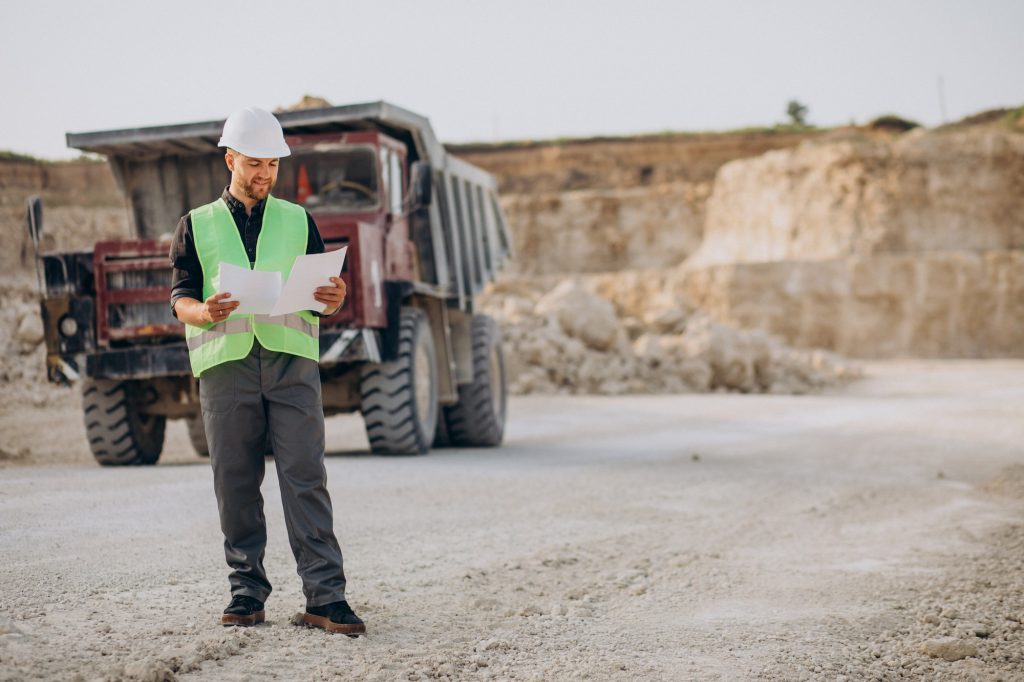
India’s much hyped Public Private Partnership (PPP) model to attract investors for the road sector has failed due to slow decisions making, hurdles in land acquisition and single window clearances. Due to this, the ministry failed to execute 21 projects worth Rs.27, 000 crore between the financial years 2013 and 2014. Taking into consideration the failure of earlier model in execution, government has now made an urgent endeavor to recuperate Public Private Partnership (PPP) with the launch of new Hybrid PPP Model, under which, the investors and government will share the contribution of 60:40 in the venture cost (where 60% to be borne by the concessionaire & 40 % by NHAI). The Government will release 40% of the revenue in the equal share of 5 instalments (each 8%) depending upon the development of the project. In addition, Government also plans to share the revenue risk with a low anticipation of traffic flow and plans to finance 100% EPC (Engineering, Procurement and Construction) cost of these projects, if required. Unlike the previous PPP Model, NHAI has an obligation to buy at least 90% of the land required, along with forest and environment clearances for the same. Honourable Minister Mr. Nitin Gadkari, Ministry of Road Transport & Highways and Shipping, is very optimist about the model and shows his confidence towards success of the same. The best part of this model that it is a time bound and a honed penalty will be charged for delay in fulfilling commitments, either on the part of the concessionaire or the government. Now the wait is only to complete the 12th Five Year Plan (2012-17) 2017 wherein the government has estimated an investment of USD 95 billion or Rs 5.7 lakh crore for the highways sector. Under this, the government has expected 50 per cent to come through private sector participation.